

Lubbock Water Well Drilling & Pump Repair
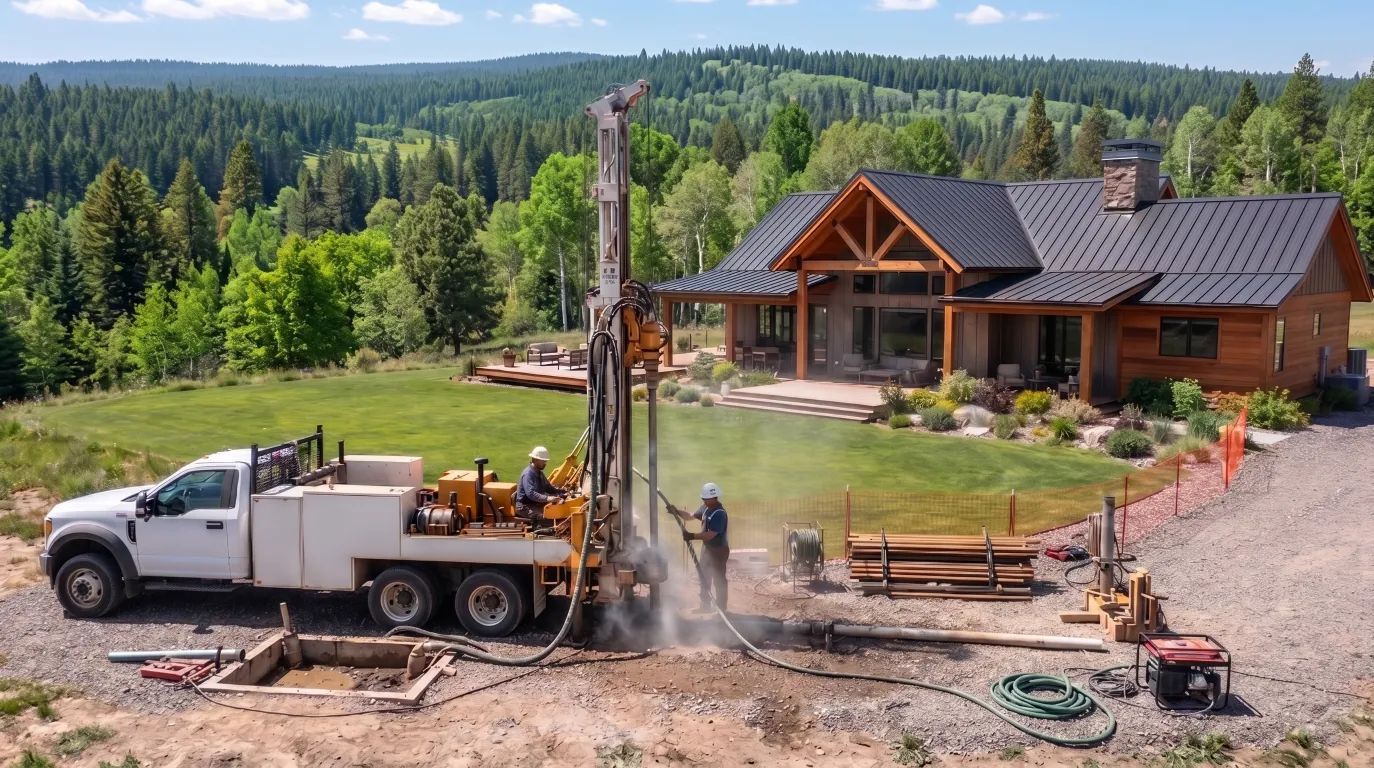
Your property relies on continuous water pressure, but tapping the Ogallala Aquifer through West Texas sand and red clay requires heavy iron and precise fluid mechanics. We engineer, drill, and case high-yield residential and agricultural water wells across Lubbock County designed to withstand shifting soils and dropping static levels.
16 TAC §76 certified surface seals protecting the Ogallala.
Mud rotary for sands & high-CFM air rotary for Triassic red beds.
24/7 submerged motor pulls, screen clearing & drop-pipe repair.
Request an On-Site Drilling or Pump Service Estimate
Whether you need a newly drilled domestic well, an agricultural irrigation bore, or emergency diagnostic pump extraction, our licensed West Texas technicians provide straightforward hydraulic assessments and upfront pricing.
Request a Drilling or Service Estimate
Direct dispatch for Lubbock and surrounding West Texas counties. We will contact you promptly.
Navigating Hub City Geology: Unconsolidated Sands and Triassic Red Beds
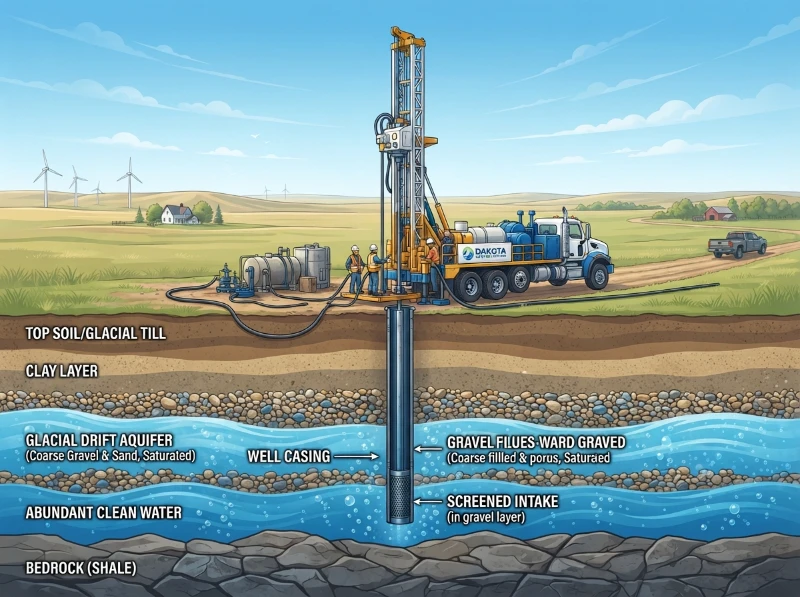
Drilling a stable borehole in Lubbock, Wolfforth, or Shallowater is a battle against gravity and fluid dynamics. The upper stratigraphy of the South Plains consists of dry, unconsolidated sands and caliche that will immediately collapse into an open void.
To counteract this, we initiate the bore using mud rotary techniques. By mixing high-yield sodium bentonite clay into our drilling fluid, we increase the hydrostatic pressure inside the borehole. The mud coats the porous sand walls, building a "filter cake" that holds the unconsolidated formations in place while the tricone bit advances. If the mud viscosity drops or the upward velocity of the fluid slows, the cuttings will fall out of suspension, burying the drill string.
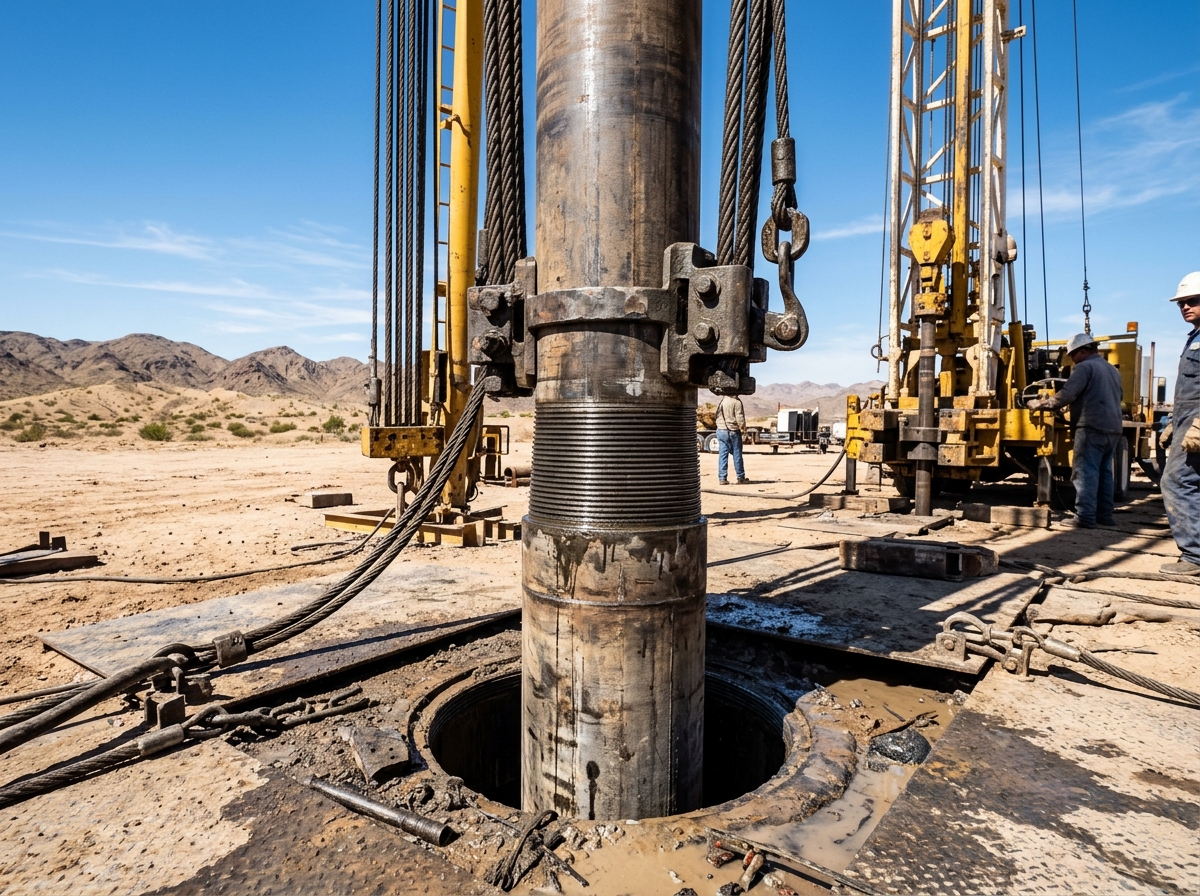
Once we punch through the unstable surface layers and reach the dense Triassic red beds, mud rotary loses its efficiency. We trip the pipe out of the hole, set a temporary surface casing to hold the sand back, and switch our rig over to air rotary. High-pressure air compressors blast down the drill string at upwards of 350 PSI, clearing the heavy red clay cuttings and blowing them to the surface. This dual-method approach ensures the borehole remains perfectly plumb and open, allowing us to drop the permanent PVC casing and screen without bridging or getting stuck.
EMERGENCY PUMP FAILURE?
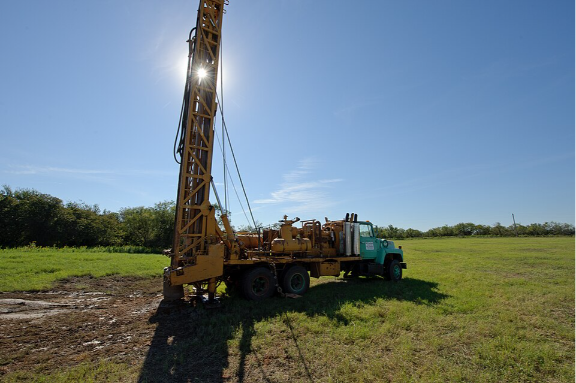
No water pressure means your household or livestock operation stops completely. We run emergency pulling rigs capable of extracting submerged motors, clearing fouled intake screens, and replacing burst drop pipes on the spot.
TDLR 16 TAC §76 Compliance and HPWD Spacing Regulations
A water well is a direct conduit to the region's most critical resource. Improperly sealed wells allow surface runoff—carrying agricultural fertilizers, pesticides, and livestock waste—to channel straight down the outside of the casing into the Ogallala. We operate as a strictly Licensed & Insured contractor, enforcing aggressive compliance with the Texas Department of Licensing and Regulation (TDLR) and the High Plains Underground Water Conservation District #1 (HPWD).
The regulatory framework dictates exactly how the annular space (the gap between the drilled borehole wall and the exterior of the PVC casing) must be sealed.
The Mechanical Sealing Workflow:
- 1Borehole Sizing: We drill the borehole a minimum of three inches larger in diameter than the outer diameter of the permanent casing.
- 2Filter Pack Placement: A carefully calculated volume of washed silica sand is gravity-fed or tremied down the annulus, settling around the slotted well screen to filter out fine aquifer particulates.
- 3The Bentonite Seal: Directly above the filter pack, we install a highly expansive bentonite clay seal. As the bentonite hydrates, it swells up to 15 times its dry volume, locking against the borehole wall and the casing.
- 4Cement Grouting: From the top of the bentonite seal directly to the surface, we pump a positive-displacement cement slurry. This creates an impenetrable barrier against surface water infiltration, satisfying state code and protecting the aquifer.
Operating across Slaton, Levelland, and Idalou, we also manage all necessary HPWD well registration and spacing requirements. Whether you are drilling a domestic supply well limited to 17.4 gallons per minute or a large-diameter irrigation well, we map the property lines and existing neighboring wells to guarantee exact legal spacing before the rig ever tracks onto the dirt.
Well Development and Yield Diagnostics
Drilling the hole and dropping the pipe is only the physical installation. A newly drilled well is choked with drilling mud, fine silt, and crushed rock. If a submersible pump is immediately dropped into a raw well, the abrasives will destroy the impellers within weeks.
We execute a rigorous mechanical well development phase to clean the formation. Using high-velocity air surging, we inject compressed air into the bottom of the water column. The sudden expansion of air lifts the water and violently pulls it back through the screen, acting like a massive plunger. This repeated surging draws the fine, naturally occurring sand out of the Ogallala formation and pulls it into the well where it is blown to the surface.
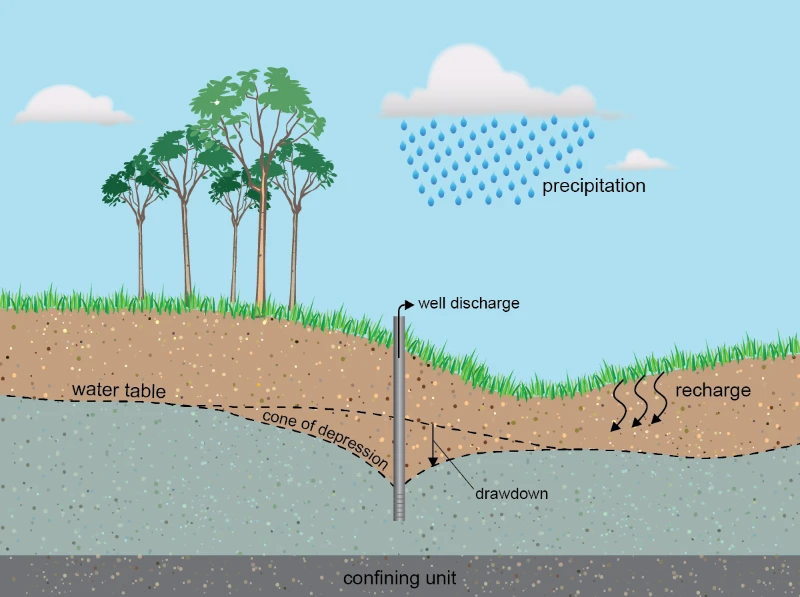
Once the discharge water runs completely crystal clear, we conduct a sustained drawdown test. We measure the static water level, engage a test pump, and monitor exactly how many feet the water drops (the cone of depression) while pumping at a set GPM. This exact hydraulic math dictates the horsepower, phase, and staging of the permanent submersible pump we install. We do not guess on pump sizing; we match the motor's performance curve directly to the aquifer's specific yield characteristics.
Request a Drilling or Diagnostic Estimate
Accurate quotes require precise data. To schedule an on-site property evaluation for a new installation across Abernathy, Tahoka, or Post, please have your property parameters ready.
Or call our routing desk directly at (806) 581-0630.
People Also Ask: Technical Well FAQs
Answers to critical hydraulic, permitting, and stratigraphy questions across the High Plains.
Have specific groundwater questions on your parcel?
Speak directly with a licensed West Texas driller or pump technician.