

Water Well Permits & Regulations
High Plains Underground Water Conservation District #1 rules, exempt well registrations, Rule 8 property line spacing plots, and 16 TAC §76 sanitary setback clearances managed entirely on your behalf.
GPS coordinate boundary plots and neighboring well spacing.
100-ft septic setbacks and certified surface annular seals.
Official 60-day TDLR state completion filing guaranteed.
Let Us Handle Your HPWD Permits and Spacing Clearances
Buying raw land? Submit your parcel coordinates or call us for a permit feasibility check prior to property closing to guarantee you have the legal clearance required to drill.
Permit Feasibility Check
Enter your parcel coordinates, county, and proposed GPM to verify Rule 8 spacing and setback feasibility.
The Legal Reality of Drilling on the High Plains
Sinking a drill bit into the Ogallala Aquifer is heavily regulated. You cannot simply buy a piece of property in West Texas, point to a spot on the dirt, and instruct a contractor to start boring a hole. Groundwater extraction across Lubbock, Lynn, Hale, and Hockley Counties falls under the direct, rigid jurisdiction of the High Plains Underground Water Conservation District #1 (HPWD) and the Texas Department of Licensing and Regulation (TDLR). Operating outside of their statutory mandates results in immediate cease-and-desist orders, heavy fines, and the forced capping of illegal boreholes.
Securing water well permits Lubbock TX landowners require demands precise site geometry, geological logging, and a deep understanding of production thresholds. The primary metric governing your legal requirements is your anticipated production volume, measured in Gallons Per Minute (GPM). The HPWD draws a hard line at 17.5 GPM. If your pumping system is mechanically capable of producing 17.5 GPM or more, you are legally required to secure an active permit before a drilling rig can even mobilize to your property. If your system produces less than 17.5 GPM—typical for small domestic setups—it is classified as an exempt well. However, this exemption does not release you from strict physical setback regulations.
HPWD Rule 8 Spacing Requirements
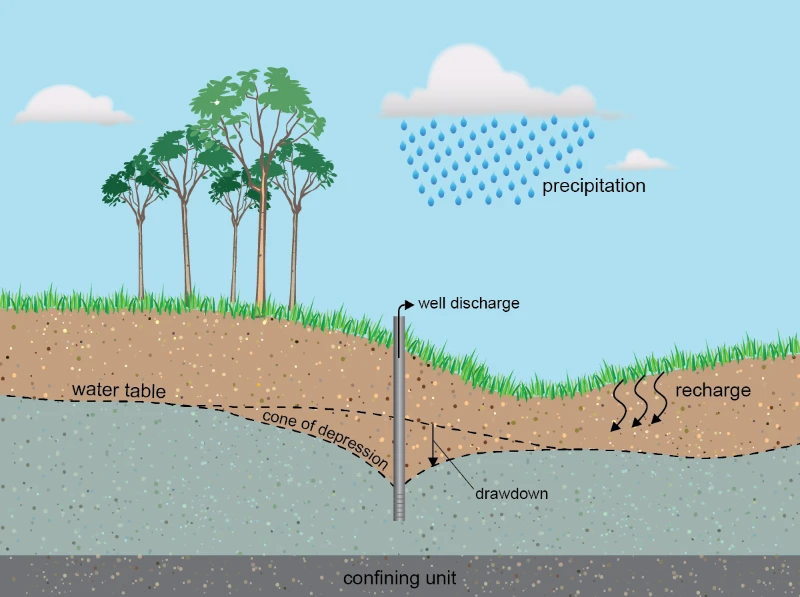
The most critical hurdle in securing high-capacity water well permits is navigating HPWD Rule 8. This specific statute dictates exact well spacing requirements to prevent massive, overlapping cones of depression. When a submersible or turbine pump extracts water, it pulls down the local water table in a funnel shape. If two high-capacity wells are drilled too close together, their cones of depression intersect, aggressively starving both pumps and accelerating localized aquifer depletion. Rule 8 prevents this by forcing massive geographic buffers between active wellheads.
The mandated distances scale aggressively based on your requested GPM.
If you are drilling a mid-size irrigation well or a high-yield domestic supply capable of 70 GPM, Rule 8 mandates that the new borehole must be spudded a minimum of 100 yards away from any existing registered well, and at least 25 yards from your closest property boundary line.
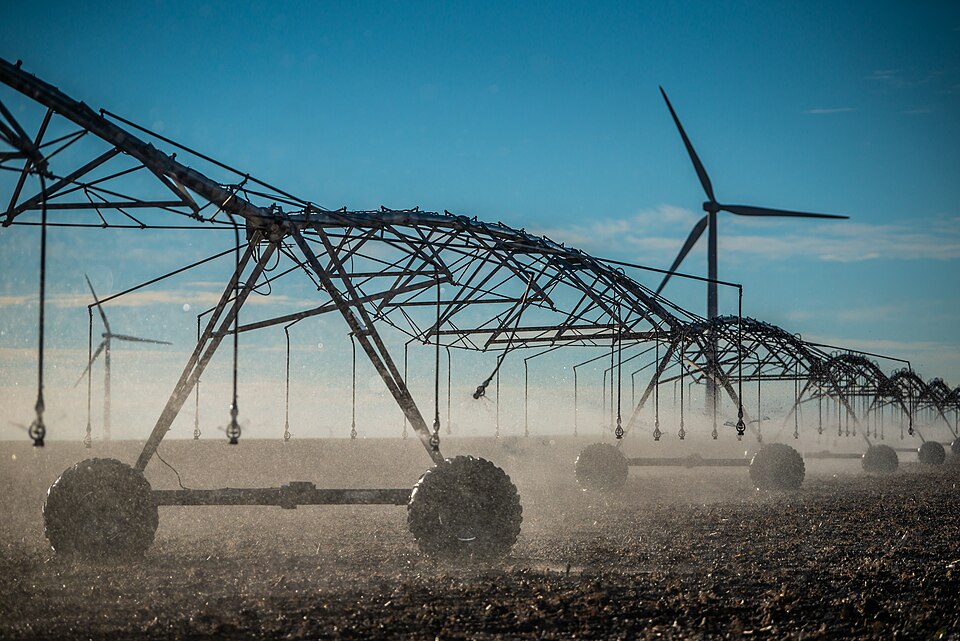
Commercial agricultural operators targeting 800 GPM or more for heavy center pivot irrigation face massive physical footprints. A well of this size requires a strict 540-yard setback from existing wells—over a quarter of a mile—and a 278-yard setback from the nearest property boundary.
These spacing rules frequently ruin raw land purchases. If you buy a narrow 10-acre tract hoping to drill a 100 GPM well, but your neighbor already has an active, registered irrigation well sitting right on the fence line, the HPWD will deny your permit outright because you cannot meet the overlapping radius requirements. We conduct advanced GPS plotting and run immediate HPWD registry checks to verify spacing compliance before you commit to a drilling contract.
The Strategic Value of Exempt Well Registration
Domestic wells equipped with 1/2 HP to 1 HP pumps that max out below 17.5 GPM are classified as exempt from the heavy HPWD permitting process. However, leaving an exempt well entirely off the official state and district grid is a massive tactical error for a landowner.
Filing an exempt well registration High Plains district form physically places your borehole on the HPWD map. This establishes your legal footprint. If you fail to register your exempt well, the district does not technically know you are pulling water. Subsequently, if a massive corporate farming operation purchases the acreage next door and applies for a 1,000 GPM irrigation permit, the district will approve their spacing based on the lack of registered wells in the area. Their new turbine pump will drop the water table right out from under your property, leaving your domestic well completely dry. Registering your low-yield domestic system forces all future high-capacity commercial drillers to legally honor your radius, protecting your household water supply from aggressive industrial drawdown.
TDLR Well Drilling Regulations and Site Geometry
While the HPWD governs the volume and spacing of the water you extract, the state-level TDLR governs the exact physical construction of the well to prevent environmental contamination. Texas water well setback rules, codified under 16 TAC §76, dictate the micro-geometry of your drill site in relation to localized biological hazards.
The primary threat to a fresh Ogallala water well is raw sewage infiltration. TDLR mandates rigid physical setbacks to isolate the wellhead from residential septic systems.
Every well must be drilled a minimum of 50 feet away from any property line. This prevents your well from inadvertently violating a neighbor's future septic placement.
The borehole must be spudded at least 50 feet away from any holding tank, aerobic treatment plant, or solid waste interceptor.
The most critical setback is the 100-foot hard boundary from any septic leach lines, drain fields, or aerobic spray heads.
Measuring these setbacks is not an approximation. Our rig operators pull hard tape on the dirt to verify the exact distances. If a lot is exceptionally narrow or awkwardly shaped, squeezing a legal wellhead between the house foundation, the overhead power lines required to lift the mast, and the 100-foot septic radius requires highly precise engineering. If you drill inside the 100-foot leach field radius, state inspectors will force you to immediately plug and abandon the well at your own expense.
Annular Pressure Cement Grouting Standards
To permanently block surface water, agricultural chemicals, and septic runoff from migrating down the outside of your well casing and poisoning the aquifer, TDLR enforces strict annular sealing protocols. You cannot simply drop a PVC pipe into a hole and push dirt back around it.
State law mandates a minimum 10-foot annular pressure cement grouting seal on all new installations. To achieve this, we must drill the top 10 to 20 feet of the borehole significantly larger than the permanent casing diameter. Once the primary casing is lowered into the hole and suspended, we introduce a rigid 1-inch tremie pipe down the open annular space between the dirt wall and the PVC pipe.
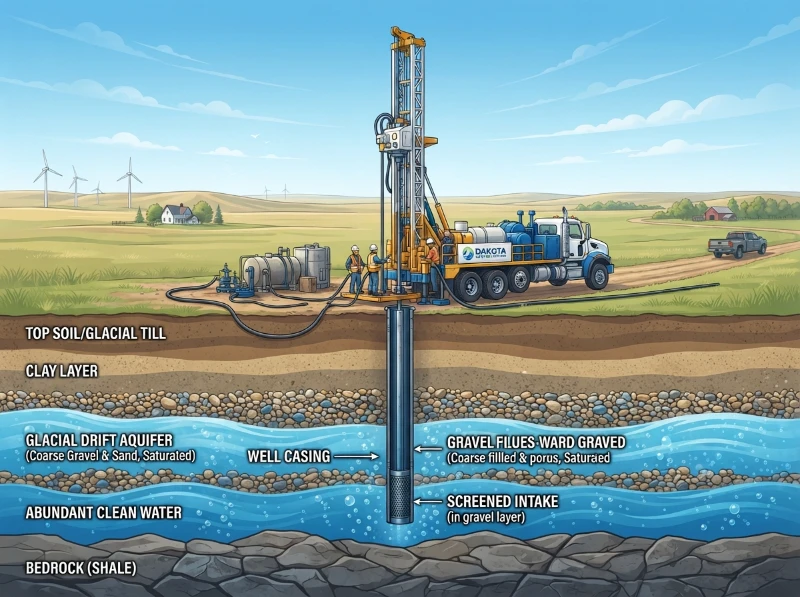
Using a specialized heavy-duty mud pump, we force high-solids sodium bentonite grout or neat cement down the tremie pipe. The thick cement is pumped from the absolute bottom of the oversized hole directly up to the surface. Pumping from the bottom up forces all standing water and loose mud out of the top of the hole, ensuring a solid, void-free concrete jacket entirely surrounds the upper casing. Once this cement cures, it forms an impermeable barrier locking the upper caprock off from the fresh water below.
60-Day State Well Report Filing
Drilling a legal well generates a heavy administrative burden long after the rig leaves the property. TDLR requires the driller to submit a comprehensive State Well Report within 60 days of project completion. This legal document serves as the permanent biological and structural record of your water system.
During the active drilling phase, our crew catches and analyzes dirt samples every 10 vertical feet. We build a detailed lithology log, recording the exact depth and thickness of every distinct clay, caliche, sand, and bedrock layer we encounter. The State Well Report mandates the submission of this geological data, alongside the exact GPS coordinates of the wellhead, the measured static water level, the total drilled depth, the exact diameter and material of the casing string, and the specific slot size of the factory screens.
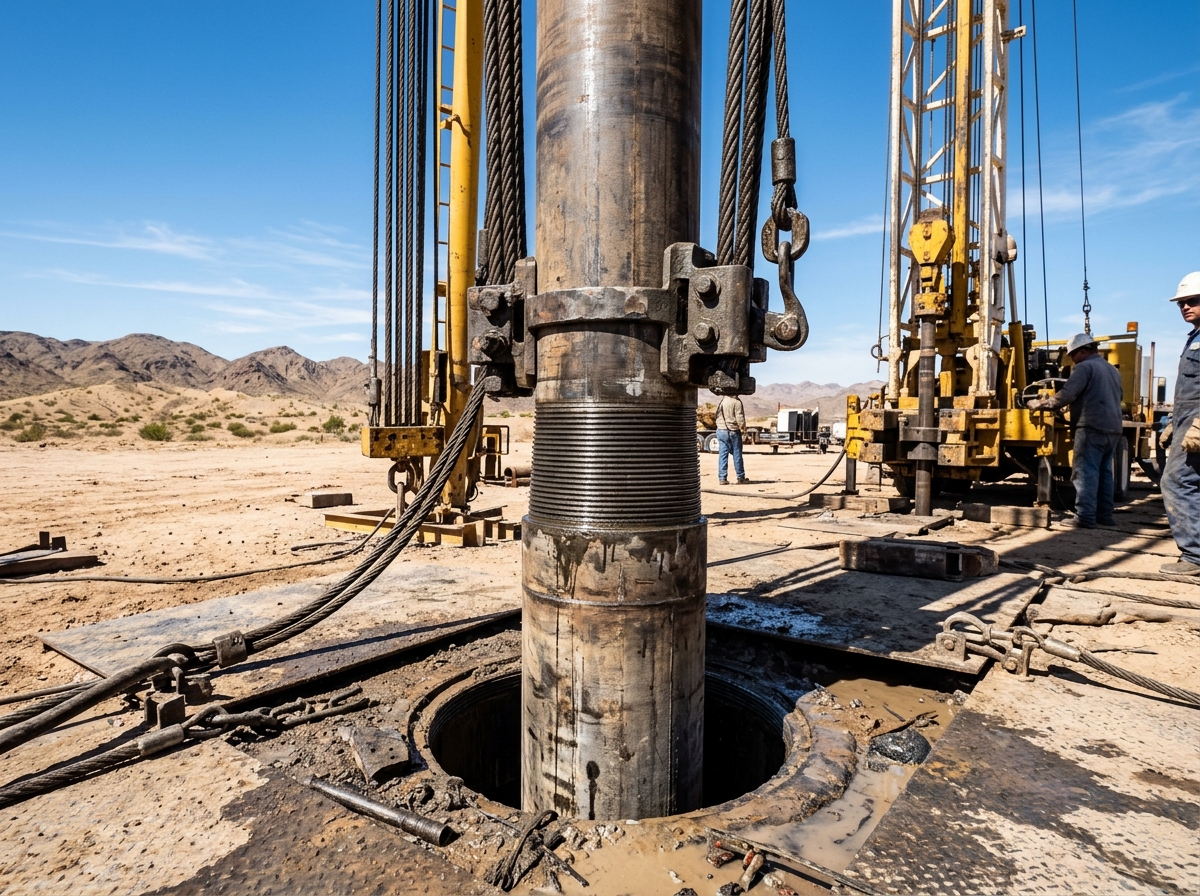
We handle this entire bureaucratic workflow. From mapping the initial HPWD Rule 8 spacing Lubbock requires, to securing the production permits, completing the pressure grouting, and filing the final 60-day TDLR logs, our regulatory desk ensures your system is 100% compliant, fully protected, and legally recorded with the state of Texas.
Verify Your Tract's Legal Drilling Spacing
Contact our regulatory desk before closing on land to verify HPWD spacing radiuses, neighbor well registrations, and TDLR septic setbacks.