

Well Water Filtration & Treatment
Fix extreme South Plains hard water, eliminate fine sand intrusion, and neutralize rotten-egg hydrogen sulfide odors. We engineer, install, and service commercial-grade water softeners, cyclonic sand separators, and whole-house reverse osmosis systems.
Centrifugal cyclonic purge traps eliminating sediment.
Heavy-duty Clack/Fleck valves built for West Texas calcium.
Total dissolved solids (TDS) reduction and UV sterilization.
Hard Water or Sand Ruining Your Fixtures? Schedule an In-Depth Analysis
Contact our dispatch desk for on-site water testing, system sizing, media re-bedding, and sediment filter replacement. We calculate exact grain capacity to fit your household flow.
Request Water Testing
Submit your water issues (sand, rotten egg odor, calcium hardness) for custom filtration system sizing.
Fine Sand Intrusion and Cyclonic Separation
If your kitchen faucet aerator is packed with fine gray sand and your bathtub fills with cloudy, abrasive water, your downhole casing is fighting a losing battle against raw Ogallala geology. As old PVC well screens degrade or gravel packs shift underground, ultra-fine sand migrates directly into the submersible pump intake. This sediment violently travels up the drop pipe, blasting through your pressure switch and settling permanently inside your plumbing trunk lines. We design and install well water filtration systems Lubbock homeowners rely on to physically strip this abrasive sediment before it enters the house.
To remove sand from well water effectively, a standard paper pleated filter is useless; the abrasive grit will shred the paper media in a matter of hours. Instead, we install heavy-duty centrifugal sand separators, commonly referred to as spin-down filters.
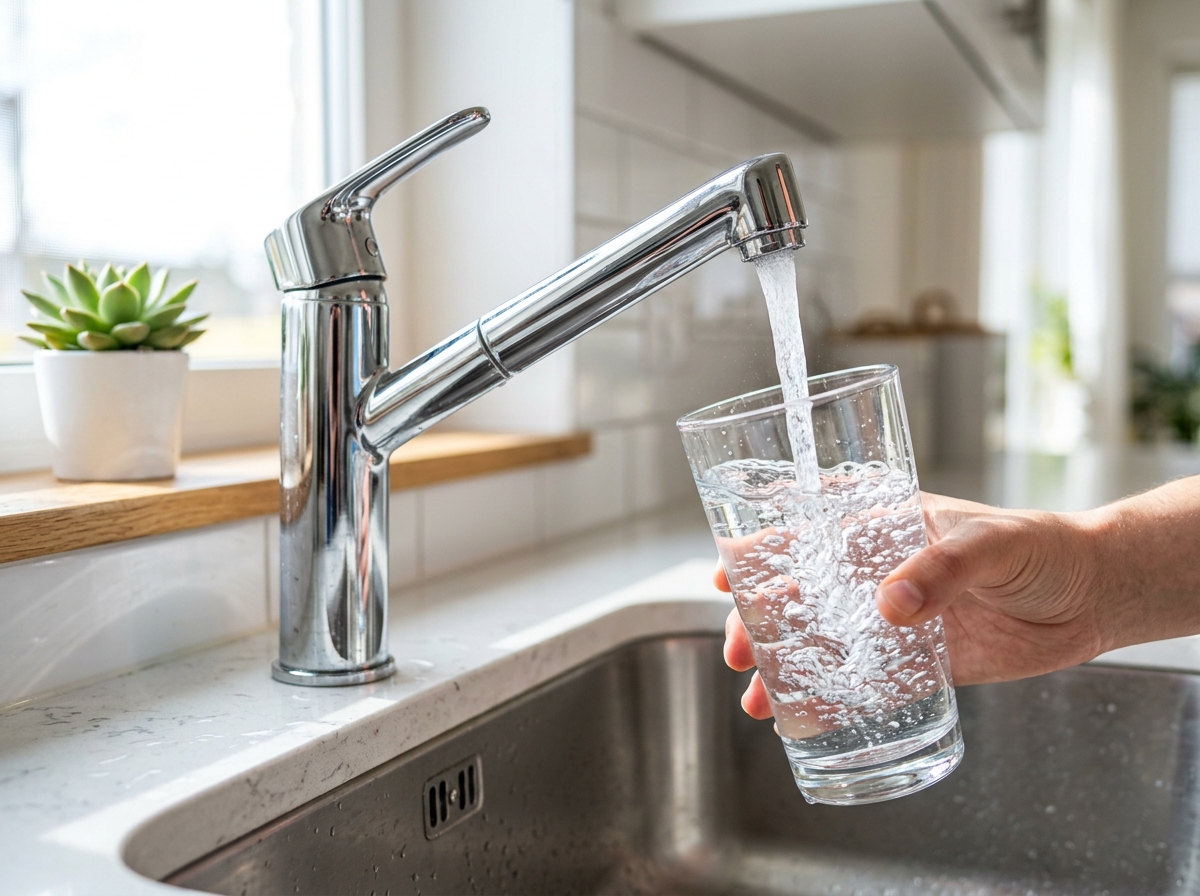
We plumb these solid brass and heavy-acrylic units directly into the mainline immediately after the well pressure tank. As the raw well water enters the top of the separator, internal directional louvers force the water into a violent cyclonic spin. The extreme centrifugal force slings the heavy sand, caliche chunks, and pipe scale outward against the clear housing wall. Gravity then pulls the dense particulate down into the bottom holding chamber. The clean water exits through the center vortex and travels to the house. Homeowners simply open a bottom ball valve once a month to purge the trapped sand directly into a drain bucket. This entirely mechanical workflow protects all downstream water softeners, water heaters, and reverse osmosis membranes from catastrophic physical damage.
Extreme Calcium Hardness and Ion Exchange Softening
West Texas groundwater produces extreme mineral scaling. Hard water across Lubbock County, Wolfforth, and Post frequently registers between 20 and 40+ grains per gallon (gpg) of dissolved calcium and magnesium. Pushing this level of heavy mineral load through a residential plumbing system destroys heating elements, scales up copper pipes until flow is restricted, and completely calcifies showerheads. A standard, cheap cabinet-style water softener bought off a hardware store shelf lacks the resin capacity and valve durability to handle a 40-grain well water supply.
We execute commercial-grade well water softener installation using independent resin and brine tanks paired with heavy-duty Clack or Fleck metered control valves.

The softening process relies on targeted ion exchange. We fill a massive fiberglass mineral tank with highly charged, cross-linked cation exchange resin beads. As the hard well water flows down through this dense bed, the calcium and magnesium ions physically detach from the water molecules and stick tightly to the resin. The resin releases sodium or potassium ions in their place, sending completely soft, scale-free water into the home.
Because we install heavily metered control valves, the system tracks every exact gallon of water you consume. Once the resin bed reaches total exhaustion, the valve automatically initiates a heavy brine draw from the salt tank. The high-concentration saltwater washes over the resin in the middle of the night, violently stripping the accumulated calcium off the beads and flushing the raw hardness minerals safely down the drain. This ensures constant, uninterrupted soft water pressure without wasting excess salt on unnecessary timer-based regenerations.
Agricultural Nitrates and Hydrogen Sulfide Gases
Decades of intense commercial cotton fertilization across the South Plains have led to severe agricultural chemical leaching. Heavy rains push surface nitrogen fertilizers straight through the caliche caprock and directly into the shallow Ogallala Aquifer. Elevated nitrate levels in drinking water pose severe health risks, particularly for infants. Standard water softeners and carbon block filters cannot remove dissolved nitrates.
To achieve precise nitrate water filtration, we utilize specialized anion exchange systems. Similar in appearance to a standard water softener, these fiberglass tanks are loaded with a strong-base macroporous anion resin specifically engineered to target and trap nitrate molecules. As the water passes through the bed, the resin swaps harmless chloride ions for the hazardous nitrates.
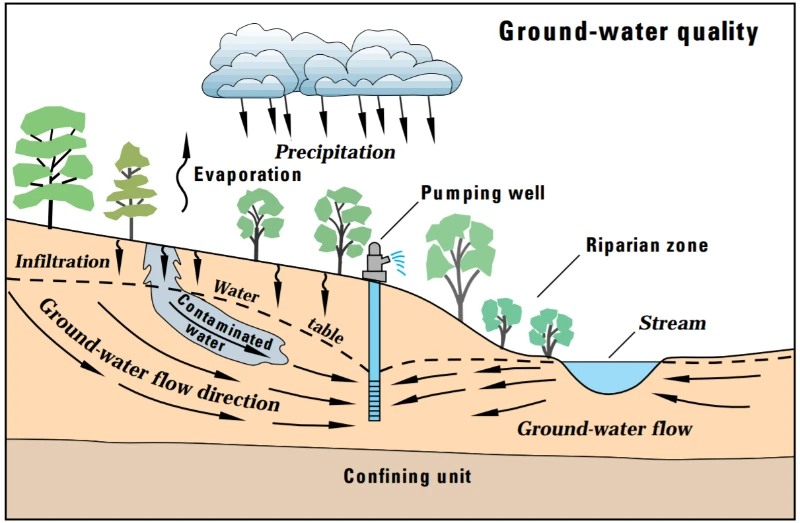
Simultaneously, many rural wells in West Texas pull water carrying dissolved hydrogen sulfide gas. This naturally occurring byproduct of decaying underground organic matter produces a potent, nauseating "rotten egg" odor every time you run a hot shower. To eliminate this gas, we deploy air injection oxidizing (AIO) filter systems.
The control valve maintains a compressed pocket of ambient air at the top of the media tank.
As the sulfur-heavy water sprays through this air pocket, the dissolved hydrogen sulfide gas oxidizes instantly, converting from a dissolved gas into a physical, solid sulfur particle.
The water then flows down through a dense bed of catalytic carbon or manganese greensand, which physically traps the solid sulfur flakes. Every three days, the valve aggressively backwashes the trapped sulfur down the drain and sucks in a fresh pocket of compressed air.
Reverse Osmosis Well Water Systems and UV Disinfection
For comprehensive Total Dissolved Solids (TDS) reduction and heavy metal extraction, we design and build reverse osmosis well water systems. We scale these from compact, under-sink point-of-use units dedicated to a single kitchen drinking faucet, up to massive whole-house RO skids that purify every drop of water entering the property.
A reverse osmosis system utilizes a high-pressure booster pump to forcefully drive the pre-filtered well water against a semi-permeable membrane. The microscopic pores in this membrane allow pure H2O molecules to pass through, but physically reject up to 99% of dissolved salts, heavy metals like arsenic and lead, agricultural pesticides, and excess sodium. The rejected contaminants are concentrated into a brine stream and flushed away, while the highly purified product water is collected in a pressurized storage tank for immediate household use.
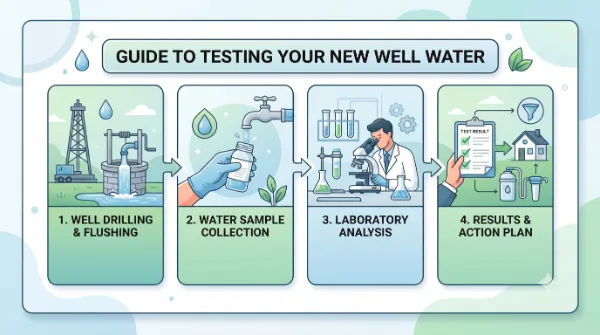
For ultimate biological security on shallow rural wells, we integrate Ultraviolet (UV) disinfection reactors into the final plumbing loop. If a well casing is cracked or the surface sanitary seal is compromised, surface coliform bacteria and E. coli can infiltrate the water supply. A stainless steel UV reactor houses a high-intensity ultraviolet lamp encased in a quartz glass sleeve. As the well water flows through the chamber, the UV light violently scrambles the DNA of any living bacteria, viruses, or cysts, instantly rendering them sterile and harmless. This provides total microbiological safety without dumping harsh liquid chlorine down your well casing. From comprehensive water treatment Lubbock TX testing to the final tightening of the filter housing, our crews build localized, heavily engineered mechanical barriers to protect your family and your plumbing.
Schedule Your In-Depth Well Water Analysis
Contact our water treatment technicians for laboratory-grade hardness, nitrate, TDS testing, and custom equipment sizing.